


WRAAC HISTORY
Brief History of the WRAAC
(PHOTOS FROM 1 WRAAC COY SUPPLIED BY DELL SHEARS RFD)
The WRAAC had its origins from the Australian Women’s Army Service (AWAS) which had been formed in 1941 to release men from some military duties to serve with fighting units. At the conclusion of WW2 the AWAS was disbanded in 1947.
Cabinet gave approval in June 1950 for the raising of a women’s Corps, WAAC ( Women’s Australian Army Corps),
within the Australian Military Forces owing to concerns of the Korean War and for prepared readiness.
In December 1950 it was approved that there be an initial intake of 250 personnel.
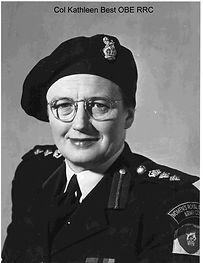
February 1951 saw Lt Col Kathleen Best appointed the first Director of the Corps.
In June 1951, King George VI granted the addition of “Royal” to the Corps namein recognition
of the wartime contributions or the women’s services and thus WRAAC came into being
(Women’s Royal Australian Army Corps)
The aim, again, was to enlist women to replace men for training and other duties required in the
preparation for war. WRAAC served as Cooks, Mess Stewardesses, Draftswomen, Clerks,
Signal Operators, Drivers and Psychologists to name a few. Courses for trades and promotion
in the NCO and Officer streams were taken as per our male counterparts.
The introduction of WRAAC into the Citizen Military Forces,
for part time training, was approved in December 1951
while recruiting did not start until June 1953.
1 WRAAC COMPANY
QUEENSLAND
WRAAC were in all States of Australia and a contingent of WRAAC Signal personnel was posted to Singapore for 12 months in 1967. The Vietnam War and Malaysian conflict era.
In the ensuing years the members of the Corps carried out the duties/jobs allotted to them in the variety of postings they filled.
Integration of WRAAC into the mainstream of the Military commenced in 1975 which saw the current serving WRAAC personnel transferring or coming under the banner of male units and the now, new, females being directly enlisted into the ADF (Australian Defence Force), and Service of choice.
The WRAAC Corps was disbanded in 1985.
We were the link between the women who served in WW2 and the women in today’s Australian Defence Force.
An important Step.
Our strong Camaraderie lives on.


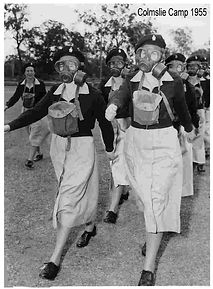
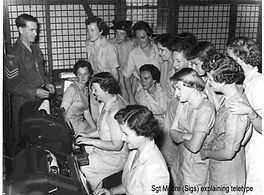


First WRAAC, Women's Royal Australian Army Corps
The Australian War Memorial.
We gratefully acknowledge the Australian War Memorial for allowing us to display this home made video which was made between 1951-1953 by Joan Fletcher.
History of Colonel Best
provided by Carolyn Paul 2026
Col Best was born in Sydney in 1910. She trained as a nurse and specialised in midwifery. She was a trailblazer in Australian nursing known for her tough but fair leadership. She was the youngest Matron in the Australian Army when called up in 1940 and posted to the 2/5th Australian General Hospital. Best served in Palestine, Greece, Egypt and Ethiopia. On 10th April 1941 she arrived in Greece and worked to set up the 5th Australian General Hospital 20 kms from Athens. Within 4 days all the essential departments of the hospital were functioning to standard, however on 20 April the CO Col W. Kay warned the nurses to be ready for evacuation. On 23 April 1941 nurses of the 2/5th AGH were to be evacuated. Best was offered a place on the first ship to leave but famously refused. She called for 12 nurses to stay behind to care for the wounded, all nurses volunteered and so she hand picked the 12 to stay with her.
The evacuees left that afternoon, hiding in a hay field and cemetery as bombs fell around them. That night they sailed to Crete. On the Afternoon of 24 April, Col Kay told Best he had been ordered to leave, tragically the ship he embarked on was blown up and he was Killed.
On 25 April, the nurses spent the day admitting casualties, evacuating others and assisting with operations. Around lunch time they were told they were to be evacuated. At 8:15pm they left. Their convoy endured heavy bombardments all the next day and arrived in Crete that evening and were reunited with the other nurses.
For Best’s courage and cool headedness in Greece and during the evacuation to Crete she was awarded the Royal Red Cross (First Class), the first to be awarded to an Australian during WWII. Col Best’s war service was to become a source of great pride among the WRAAC members, epitomising admirable qualities of selfless service for others, doing one’s duty and maintaining impeccable standards under extreme conditions.
Best was also highly regarded by the military for her courage and leadership. After returning to Australia in mid 1942 she was appointed controller of the VAD’s (Voluntary Aid Detachment) and when the service was reorganised she became controller of the AAMWS in June 1942. She was subsequently appointed the first Assistant Adjutant-General (Women’s Service) on 10 February, 1943. In September 1944 she became a civilian and as an assistant director in the Department of Postwar Reconstruction, her first task was advising on and planning the demobilisation and re-establishment of all servicewomen.
Best was a woman of great presence, tall, dignified and possessing a dry wit that could cut through military bureaucracy. A trait that she would need as first director of the Corps.
When cabinet gave final approval to re-establish the women’s services, Col Best as controller of the AAMWS, Sybil Irving previous controller of the AWAS and Isla Winpole assistant to the Adjutant-General were selected to reestablish the army women’s service.
They recommended that the Women’s Army service and the Nursing service have the status of Corps.
On 12 February 1951 with the rank of Lt Col she was appointed as the first Director of the new women’s army service. She was promoted to the rank of honorary colonel in September 1952.
Col Best wrote to women she had served with in the AAMWS and invited them to join the WRAAC. Members included WO, later Maj Pat Rawlings, Capt Dawn Jackson, Capt Alice Down, Capt Heather Reynolds and many other NCO’s and Officers. Col Best brought to the new Corps a formidable reputation. She lectured on leadership and morals at NCO and officer training and was recognised for having the skill at drawing people out and enabling them to clarify their thinking and responses through astute questioning.
For 6 years Col Best devoted herself to establishing the Corps in both the regular army and the CMF. Col Best new members personally and she inspired them to strive for achievement, believe in yourself and support others. Best was awarded an OBE in 1956 and gave her reason for accepting the award as the recognition and efforts of every member of the WRAAC.
Along with Lt Col Sybil Irving, previous controller of the AWAS they established the ethos and traditions of the Corps. They insisted that WRAAC were ladies first and soldiers second. So, when Col Irving and Col Sage (RAANS) selected the new uniform. They had the choice to approximate that of male soldiers or emphasise femineity- the latter was chosen.
Col Irving was also opposed to post war women’s services arguing that they were neither desirable nor necessary and that regimentation is unnatural to women and the conditions of army life was not suited for women on whom the country depends. Although, Col Irving served herself, I assume that the horrors of war that she saw influenced her views.
Initially WRAAC members were not permanent members of the defence force and were not entitled to a pension.
Col Best campaigned for WRAAC to obtain permanent status and the pension, for better accommodation, for them to serve overseas and for a better career structure. At every step Col Best faced opposition from the Military Board, Cabinet and Treasury.
Discrimination on a formal level including the lack of a career structure troubled Col Best, as was the issue of further training and experience for female officers. In 1954 Col Best suggested a WRAAC pre-entry course for staff college. The courses began in 1955 and continued for many years, however no WRAAC were admitted to ASC.
When Col Best investigated this, she was informed that there was no sleeping accommodation available and WRAAC and they would need to stay at a local hotel which would be expensive and not ideal for studying and therefore expenditure for WRAAC to attend ASC could not be justified. It was not until 1963 that the first WRAAC attended an interim course at the Australian Staff College. WRAAC were not admitted to the full course until 1980.
Col Best argued to send the women to the UK to the WRAC Staff College because it would be a much needed attraction to the corps and it was designed specifically for women. It would also widen the experience of WRAAC members. Minister for Defence initially opposed the decision however in 1956 approval was given for WRAAC to attend WRAC SC.
In 1957 Col Best recommended that one female officer be posted at all times on exchange with the WRAC. It was not until 1971 that the first exchange took place.
Matron in Chief and directors of women’s services opposed retention of women on marriage. Col Best however was in favour in certain circumstances. She argued that Women had the reputation of requiring less discipline (largely because they drank less alcohol than men) and set higher standards of behaviour. Col Best protected members from the effects of alcohol by barring them from serving it in male messes. At a conference of directors in 1954, officers complained that they were not permitted to attend dining-in nights. Col Best acknowledged their anger but counselled that it would be better to accept such rebuffs at this point.
Col Best was a staunch royalist, and so recommended that Princess Margaret be appointed as the Colonel in Chief. This was somewhat of an odd recommendation as at the time, Princess Margaret was considered to be a party goer, smoker and … her behaviour incongruent with the image the Director wanted to set for WRAAC.
In November 1957 Col Best was admitted to hospital with melanomatosis and died on the 15 November 1957. Col Best’s leadership, values and beliefs greatly influenced future Directors and the direction of the Corps. It wasn’t until social values began to change that the direction of the Corps also changed with far more opportunities opening up for women in service.
I wonder, what a modern day Col Best would think of the opportunities and jobs available to women in the service today. After reading a great deal about her work in fighting for better career opportunities for women I think she would be very pleased that her girls paved the way for future generations of service women.
This document was researched and completed by Carolyn Paul for the 75th Anniversary Corps Day Luncheon in 2026
ABOUT US
Introduction to the Commencement of the Women's Royal Australian Army Corps Association (Queensland)
In 1978 the inaugural Conference of WRAAC Association Australia was held and in attendance were Delegates from NSW, SA, Vic and WA who were leading the way in forming Corps Members Associations. WRAAC Corps members in Queensland had taken note of this and started looking for expressions of interest in the formation of an Association in our State. Some of the founding members were already financial with the NSW Association.
The Steering Committee to set up a Queensland Association was Heather Reynolds, Thelma Crouch, Jay Chadwick, Stella Freeman, Mary Morrow and Noela Wotherspoon.
Following the groundwork that took place here, the first meeting was convened on the 24th May 1980 and Judith Polkinghorne (Munday) was elected our first President. 58 WRAAC, Regular and CMF, were present and 37 apologies received.
The Constitution was adopted and the objectives were the following:
-
Stimulate interest and promote the Corps as a whole fostering and strengthening the ties of comradeship
-
Provide social and sporting events for general participation.
-
Assist members of the Association in need.
-
Support the many charities operating for the benefit of ex-service men and women.
Our Association has abided by these and as maturity has caught up made sensible adjustments at the appropriate times.
The Queensland Association became Incorporated on 23 March 1995. The Association was affiliated with the Australian Body for many years and in that time provided delegates to attend conferences held in various States. Queensland eventually withdrew but kept close liaisons with all the other state Associations.
As at the commencement (launch) of this website, it has been 36 years since that first meeting and over 400 WRAAC have passed through our doors. Some have only been members for a short period of time and others have been staunch “in for the whole ride” Comrades/Friends. It has been great to catch up with all these folk, to be there for them, to enjoy our service days in times gone by but to remember the important part that we have played in the history of women’s service in our countries defence force.
In keeping with the changing times, 2021 saw the Constitution take a massive overhaul and a proposed 'Rules of Association'
document was accepted by the members. The State's Office of Fair Trading, the body responsible for Incorporations, approved the document in February 2022.
The objectives of the Association are as follows.
To stimulate interest and promote the Corps by:
-
fostering and strengthening the ties of camaraderie; companionship and well being;
-
assisting members of the Association in need; and
-
preserving the service history of the Corps and the women who have served in the Corps
There have been many mile stones in the Association History that have been important to us and us alone and these events have been the personal association with our service counterparts in the other States and also meeting up with the many women from other Services who served this country of ours.
Video created for the 70th Anniversary
by Association member Margie Gadd OAM
